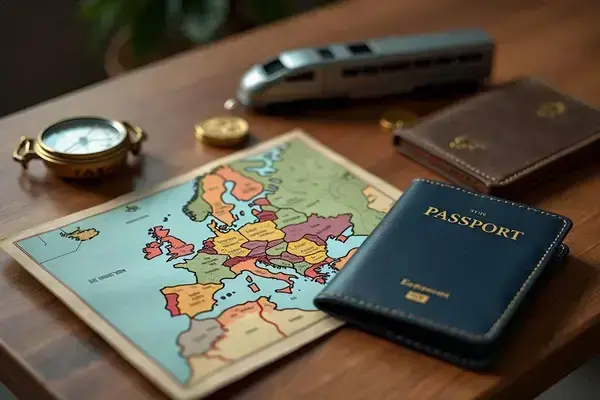
Picture this: you land in Paris after an overnight flight, jet-lagged, clutching a rail pass you’re not sure how to use—boarding starts in five minutes. Your phone shows three train options, none clear. You typed “travel tips europe first time visitor” last night; now you just want the simple path that works.
The truth is, first-time trips get messy fast. Overpacked bags, too many cities, and the wrong ticket can drain hundreds of euros and days of joy. You end up rushing past cathedrals, eating sad meals near stations, and paying surge prices—because confusion steals time, and time on vacation is money.
Here’s the thing: by the end, you’ll have a clear two-week framework, a plain-English Eurail vs point-to-point decision, and region-by-region guidance. You’ll know when Western shine is worth the cost, where Eastern Europe delivers big value, and how Scandinavia rewards slow travel. This guide nails the essentials for travel tips europe first time visitor—let’s get your trip clicking into place.
Biggest First-Timer Mistakes (And Stress-Saving Fixes)
Overpacking, cramming five cities into six days, tapping “Yes” on a card terminal you don’t quite understand—sound familiar? First‑timers lose money and time this way. And the stress? It follows you from airport gate to hotel check‑in.
Worried you’ll waste hours in lines or pay mystery fees you didn’t plan for? Here’s the thing: most pain comes from a handful of predictable mistakes you can fix today—before you book another ticket.
💡 Pro Tip: When a payment terminal offers dynamic currency conversion (DCC), always choose the local currency. You’ll usually avoid a 3–6% markup hidden in the exchange rate.
Picture this scenario: you roll into Milan with a rail pass and learn your high‑speed train needs a paid seat reservation. The kiosk’s down, the queue is long, and the cheaper fare disappeared. One tiny detail—big ripple effect.
Mistakes And Fixes At A Glance
| Common Mistake | Stress‑Saving Fix | Impact |
|---|---|---|
| Overstuffed itinerary | Use 3–4 bases; add day trips | Save 6–8 travel hours and €100+ in transfers |
| No seat reservations with rail passes | Reserve TGV, AVE, Frecciarossa, Eurostar routes early | Avoid denied boarding and €30–€50 surcharges |
| Accepting DCC at terminals/ATMs | Pay in EUR/GBP/CHF; decline conversion | Keep 3–6% per transaction |
| No data plan on arrival | Install a prepaid eSIM; cap data | Skip roaming shock and wasted time |
| Wrong plugs/charging setup | Type C/F adapter + 20W USB‑C charger | Keep phones and tickets ready, always |
Quick Stress‑Saving Setup
What you need:
- No‑foreign‑transaction‑fee card with contactless payments
- Prepaid eSIM app (e.g., Airalo, Holafly) installed before departure
- Universal Type C/F adapter and 10,000 mAh power bank
- Carry‑on kit: packing cubes, rain shell, and lightweight shoes
- Pick no more than three hubs for 10–14 days; add day trips instead of extra hotel moves.
- Check train reservation rules on national operators (SNCF, Trenitalia, Renfe, DB, SBB) and note fees—your rail vs. point‑to‑point decision comes next.
- Set money rules: decline DCC, enable travel alerts, withdraw from bank ATMs only, and set a daily spending cap in your banking app.
- Go online on landing: activate your eSIM, download offline maps, and save your hotel address in the local language.
- Prebook timed entries for top sights and early trains to dodge queues and peak‑season surcharges.
- Pack to 10 kg or less; avoid checked‑bag delays and baggage fees that stack up fast.
According to the European Commission’s Air Passenger Rights (Regulation EC 261/2004), long delays and cancellations may qualify for compensation—know your options. U.S. travelers can enroll in the Department of State’s STEP for safety alerts.
For visas, the Schengen 90/180‑day rule, or insurance coverage limits, consider consulting your foreign affairs office or a licensed travel advisor.
And this is exactly where most people make the most common mistake—choosing the wrong train ticket strategy without running the numbers first…
Two-Week Europe Game Plan And Trains: Eurail Vs Point-To-Point
Two weeks sounds short, right? It is—but with smart hubs and the right ticket strategy, you’ll see more and spend less stress. The decision hinges on one thing: flexibility versus price certainty.
Here’s the thing: a clean framework wins. Use three or four bases (think Paris, Amsterdam, Berlin, Munich), travel in the morning, and stack day trips instead of extra hotel moves.
| Option | Best For | Watch‑Outs / Typical Cost |
|---|---|---|
| Eurail Global Pass (4–7 days in 1 month) | Flexible plans, last‑minute changes | Seat fees on Eurostar/TGV/AVE (€10–€38); effective per travel day often €55–€90 |
| Point‑To‑Point Saver Fares | Fixed dates booked 30–60 days out | Dynamic pricing (€25–€120 per leg); limited refunds/changes |
| One‑Country/Regional Pass | Dense networks (e.g., Switzerland, Benelux) | Great coverage; some premium trains still need reservations (€5–€20) |
In practice: picture this scenario—Paris → Amsterdam (Eurostar high‑speed), Amsterdam → Berlin (IC/ICE), Berlin → Munich (ICE). Early saver fares might total €120–€180 if you lock dates. A pass could run ~€70/day × 3 = €210 plus reservations (~€20–€35 for Eurostar; €4–€6 optional on ICE), landing near €240–€255. Cheaper? Saver fares. More freedom to change plans? The pass.
According to Eurail (Eurail B.V.), reservations are mandatory on Eurostar, TGV, and AVE, while many ICE routes in Germany are optional. National operators like SNCF and Deutsche Bahn publish current reservation rules and seasonal surcharges.
How To Choose In 6 Steps
- List long intercity legs (3+ hours). Count how many travel days you’ll need.
- Check reservation rules for each leg and note fees by route and seat class.
- Price point‑to‑point saver fares for fixed dates; record total with refund rules.
- Price a pass that matches your travel days; add reservation costs per leg.
- Decide your flexibility premium: is changing trains day‑of worth €15–€40 per day?
- Lock the mix: pass for high‑fare corridors, saver fares for cheap fixed legs.
💡 Pro Tip: Plan move days on early trains (arrive by noon), then check in and explore a nearby neighborhood—this preserves energy and lets you pivot if delays hit.
Worth noting: building the route around 3–4 hubs cuts transit hours and hotel turnover, which often saves more than any fare hack. But there’s one detail most travelers overlook until it’s too late—the seat‑reservation trap on specific high‑speed corridors…
Western Europe: Culture Highlights, Costs, And When To Go
Western Europe shines with depth—think Louvre to Prado, Gaudí to Gothic, tapas bars to Alpine huts. You’re here for culture, not chaos. So match your timing and budget to how you actually travel.
The truth is: price swings follow seasons and city events. A basic cappuccino runs €2–€4, museum entries land near €12–€25, and mid‑range hotels often sit between €140–€220 per night in capitals. Weekend surcharges and festivals push those numbers up fast.
💡 Pro Tip: Track local holidays and citywide events (Fashion Week, major football matches, trade fairs). Rates surge, attractions book out, and even humble bistros add “event menus.”
In practice: you split a week between Paris and Amsterdam in May. Shoulder season means kinder queues, fresh produce markets, and café terraces that don’t feel like a scrum. You book flexible, non‑refundable advance rates for hotels—lower than walk‑in—but align them with train arrivals to avoid stranded nights.
When To Go: Season Trade‑Offs
| Season | What You’ll Experience | Budget Impact |
|---|---|---|
| April–May (Spring) | Blooming parks, Easter markets, milder crowds; some rain and crisp evenings | Shoulder pricing; better hotel value midweek |
| June–August (Summer) | Long days, festivals, beach escapes; peak tourism and occasional heatwaves | Highest rates; book months ahead for central stays |
| September–October (Fall) | Warm seas early Sept, harvest festivals, thinner lines at big museums | Softened prices; strong value on city cards |
Culture highlights worth crossing borders for? Paris’s Musée d’Orsay and night Seine views; Barcelona’s Sagrada Família and modernist routes; Amsterdam’s canal houses plus Rijksmuseum; Lisbon’s fado nights and azulejo workshops; Munich’s beer gardens and day trips to lakes and castles. UNESCO lists many of these sites, signaling global significance and careful preservation.
According to the European Travel Commission, shoulder periods consistently balance comfort and spend, while peak months deliver energy at a premium. If you’re cost‑sensitive, anchor your trip around midweek stays, city passes for clustered museums, and early dinner seatings before the 8 p.m. rush.
What actually works might surprise you—one small calendar tweak can unlock calmer galleries, better room categories, and more authentic evenings just one street off the main square…
Eastern Europe: Best-Value Cities, Logistics, And Safety Notes
Chasing real value without headaches? Eastern Europe delivers—grand squares, historic baths, forested hikes—at prices that let you linger. But you’ll want smart logistics to keep that value intact.
Here’s the thing: everyday costs stay friendlier than in the West. Expect €55–€90 per person per day for mid‑range travel, with coffee €1.50–€3, hearty dinners €10–€18, and central hotels often €60–€110.
Best‑Value City Benchmarks
| City | Why It’s Great | Est. Mid‑Range/Day |
|---|---|---|
| Kraków | Old Town charm, Auschwitz day trips, lively food scene | €65–€85 |
| Budapest | Thermal baths, Danube views, efficient metro | €70–€90 |
| Bucharest | Belle Époque streets, access to Transylvania | €60–€80 |
| Sofia | Mountain day trips, budget‑friendly dining | €55–€75 |
| Gdańsk | Baltic waterfront, WWII history, easy rail links | €65–€85 |
Worried about borders and checks? Some routes still require passport ID at non‑Schengen crossings—carry it on intercity trains and buses. The European Commission notes that temporary checks can appear around events and holidays.
💡 Pro Tip: Validate transit tickets where required. Prague’s DPP and Budapest’s BKK fine riders on the spot if paper tickets aren’t stamped or activated before boarding.
In practice: you land in Bucharest late. You withdraw at a bank ATM inside the terminal, request a licensed taxi at the official desk, and check in by midnight. Next morning, you buy a second‑class seat on CFR Călători to Brașov—mountain views, café on the square by noon. That’s value without drama.
Logistics shortcuts that pay off:
- Intercity choices: rail with PKP Intercity (Poland), České dráhy (Czechia), MÁV‑START (Hungary), CFR Călători (Romania); buses with RegioJet or FlixBus for cheap cross‑border hops.
- Seat strategy: reserve for popular Friday/Sunday trains and all sleepers; compartments buy you quiet time for a modest premium.
- Payments: contactless is common, but carry small cash for markets, lockers, and rural cafés.
- Rides: use official apps (Bolt, Free Now where available) or airport taxi desks to avoid meter games.
- Driving: some countries require digital motorway vignettes (Czechia, Slovakia, Hungary, Romania). Buy before entering the highway to dodge fines.
And this is exactly where most people make the most common mistake—assuming the cheapest bus beats rail even when station location, delays, and city‑center arrival tell a different story…
Scandinavia: Budget Reality, Scenic Routes, And Weather Smarts
Sticker shock is real in Scandinavia—yet the payoff is huge. Fjords, midnight sun, design museums, and trains that slice through mountains. You’ll enjoy it more when your budget and timing match the landscape.
Budget reality first. Expect mid‑range days around €150–€230 per person in capitals, with coffee at 30–55 NOK, a casual lunch near 120–180 SEK, and sit‑down dinners often 180–300 DKK. Contactless cards rule, service charges are baked into menu prices, and tipping stays modest for counter service—rounding up is fine.
⚠️ Important Warning: Weather swings fast on coasts and plateaus. Check Norwegian Meteorological Institute (Yr) or SMHI forecasts daily, and build slack into travel days—ferries and mountain lines can pause during storms.
Scenic routes worth your time aren’t about speed; they’re about drama. The Bergen Line crosses the Hardangervidda plateau—wide skies and tundra views—while the Flåm Railway spirals from high valley to fjord. North, the Ofoten Line drops into Narvik with iron‑ore trains and raw peaks. Sweden’s Arctic Circle Train slides past endless forest before hitting the mining town of Kiruna.
In practice: you plan Oslo → Bergen by morning train, then a late‑afternoon fjord cruise. Rain hits the coast—classic Bergen. You swap the cruise for Bryggen’s wooden wharf and a warm fish soup, then take the Flåm run the next day when skies clear. Same budget, better photos, zero stress because your schedule had breathing room.
When to go hinges on daylight. June and July bring very long days—Tromsø can see 24‑hour light—so you’ll pack an eye mask and plan late golden‑hour walks. December narrows daylight to a few hours above the Arctic Circle; city lights, saunas, and museums carry the trip then, while rail timetables tighten.
Getting around stays simple if you think corridors. Oslo–Bergen is rail perfection; Stockholm–Copenhagen via Öresund Bridge is seamless; Copenhagen–Oslo works by overnight ferry or a rail‑bus combo. Airport express trains are fast but pricey; regional services often cost less for only a small time trade‑off.
For drivers, Statens vegvesen updates on winter closures and chain requirements help you avoid white‑knuckle surprises, and Danish Road Directorate alerts flag wind restrictions on bridges. Small steps—layered clothing, flexible days, and one scenic anchor per region—make the biggest difference over time.
Your First Europe Trip, Sorted
You’ve got the big three: a 2‑week framework with 3–4 hubs, the right rail choice (pass vs saver fares), and region‑by‑season timing that fits your budget. These travel tips europe first time visitor keep costs, time, and stress in check. If you take just one thing from this guide, let it be: plan around a few smart bases and choose your train strategy before you book anything.
Before, it felt chaotic—too many cities, mystery fees, last‑minute scrambles. Now you can move with intent. Light bag. Early trains. Seat reservations where they matter. You’ll pick Western sparkle or Eastern value on purpose, and flex around Scandinavian weather without blowing the budget. That’s control.
Which piece will you tackle first—locking your three hubs, pricing Eurostar vs ICE legs, or reshaping dates for shoulder season wins? Tell us in the comments; we’d love to hear your route and what you’re most excited to see.

Ava Marie Caldwell is a passionate traveler, travel planning writer, and the founder of this blog — built for people who want to travel more, stress less, and actually enjoy the planning process.
After years of figuring things out the hard way — overpacking for every trip, booking the wrong accommodation, missing cheap flight windows by days, and once arriving at an airport without a printed visa — Ava decided to document everything she learned and put it in one place.
This isn’t a luxury travel blog with sponsored resort stays. Ava is not a certified travel agent or tourism professional — just someone who has taken the trips, made the mistakes, and found the systems that actually work for real travelers with real budgets and real lives.
Every article on this site is researched with care, written from genuine experience, and designed to save you time, money, and the kind of stress that ruins the first day of a trip you’ve been planning for months.
Whether you’re packing for your first international flight, planning a road trip with the family, or finally doing that solo trip you’ve been putting off — this blog was built for you.
When she’s not writing or planning her next trip, Ava is testing new packing systems, comparing flight booking tools, and trying to convince everyone that a carry-on is always enough.