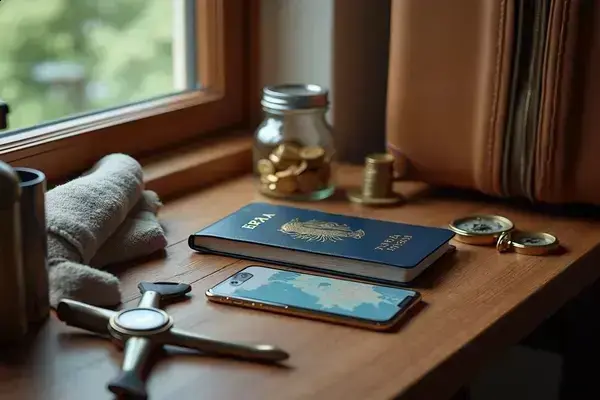
Ever hit “book” and feel your stomach drop—wondering if going solo is brave or just reckless? Consider this your solo travel tips for beginners guide, built from hard-won lessons and calm, practical steps. You’ll learn what matters, what doesn’t, and how to start without second-guessing every click.
Here’s the thing: first trips stall because fear stacks up. Safety worries spiral. Loneliness looms. Then decision fatigue hits—tabs open, budget leaking, time slipping. You waste days comparing cities and hotels, overpay for “safe” options, and arrive exhausted before the plane even lifts off.
By the end, you’ll have a clear first-solo framework: how to pick the right destination, book safe stays, meet people naturally, and run a simple daily check‑in for peace of mind. This solo travel tips for beginners guide strips stress and gives you confident next steps. Ready to feel steady from day one?
Start With Safety, Loneliness, And Decision Fatigue
Worried you’ll get lost, feel alone, or freeze at a wall of choices? Start by taming the big three—safety, loneliness, and decision fatigue—before they ambush you on day one.
Here’s the thing: you don’t need perfect plans. You need a simple system that lowers risk, creates connection, and narrows choices so your brain stops spinning. Do that, and the rest gets lighter.
The Three Starter Risks, Simplified
| Risk | What To Do | Tool/Anchor |
|---|---|---|
| Personal Safety | Pre-check neighborhoods; share live location; arrive in daylight | Offline maps, hotel address card, phone SOS |
| Loneliness | Schedule social touchpoints daily | Hostel commons, free walking tours, cowork cafés |
| Decision Fatigue | Limit choices to two solid options | Pre-built shortlists, “two-option rule” |
💡 Pro Tip: Save local emergency numbers, your lodging in the local language, and a primary contact. The U.S. Department of State and CDC Travelers’ Health both recommend keeping critical info offline.
For destination-specific medical or legal guidance, consider a licensed travel medicine clinic or local authority before departure.
Picture this scenario: it’s 8:30 PM, you’ve just landed in Lisbon, and your SIM won’t activate. Because you preloaded the hotel’s address and pinned it offline, you show the card to the taxi, text your check-in code when Wi‑Fi appears, and breathe again—no drama.
Time: 10 minutes. Use this fast setup to steady your first solo days:
- Enable device SOS and add two emergency contacts; test it once.
- Download offline maps; pin airport, lodging, and one late-night pharmacy.
- Write a two-line arrival script for meeting people (hostel desk, tour guide, café barista).
- Create a two-option shortlist for breakfast, coffee, and dinner near your stay.
- Share your arrival window and lodging address with a trusted contact; set one check-in time.
And honestly? These small moves beat elaborate plans because they work under stress when memory fails and battery dips.
What actually works might surprise you…
Choose Your First Destination With Confidence
Overwhelmed by options and worried you’ll pick “wrong”? Choosing your first solo destination gets easier when you use a few clear filters—not endless research tabs.
Here’s the thing: the best starter spots share three traits—simple entry rules, strong transit, and predictable costs. Pick for infrastructure first, vibe second, and your stress drops fast.
Starter-Friendly Destination Types
| Option | Why It’s Easier | Watch-Outs |
|---|---|---|
| Compact European Capitals (e.g., Dublin, Copenhagen) | Walkable cores, reliable metro, English widely used | Higher nightly rates; book early for shoulder season |
| Highly Organized City-States (e.g., Singapore) | World-class transit, clear signage, low hassle | Premium pricing; plan meals to manage budget |
| Scenic Mid-Size Hubs (e.g., Vancouver) | Nature + city balance, safe neighborhoods | Weather swings; pack versatile layers |
💡 Pro Tip: Start with this four-point filter: nonstop flight under 8 hours, no complex visa, transit pass available (day or week), and a central area with reputable mid-range hotels or private hostel rooms.
Why these levers? According to the Global Peace Index (Institute for Economics and Peace) and the World Economic Forum’s Travel & Tourism Development Index, safety and infrastructure strongly influence first-timer comfort and trip efficiency.
Use these practical decision filters to lock your shortlist fast:
- Entry: visa-free or visa-on-arrival for your passport; clear arrival procedures.
- Transit: airport rail link plus tap-to-pay metros or buses.
- Budget: shoulder-season pricing; compare refundable fares and basic travel insurance.
- Language: English signage or high English proficiency to reduce friction.
- Time: nonstop or single-connection flights; aim for daytime arrivals.
- Logistics: eSIM availability, safe water access, predictable weather windows.
In practice: you’ve got 6 days off, fly from the East Coast, and want walkability. Dublin clears the filters—nonstop under 7 hours, compact center, easy Leap Visitor Card. You choose a boutique hotel near a tram stop, note average meal costs, and keep one day trip as an optional add-on—no overstuffed schedule.
The truth is, clarity beats “dream list” debates. Infrastructure, then vibe, then extras like day tours and food halls.
But there’s one detail most travelers overlook until it’s too late…
Book Smart: Accommodation Safety Criteria That Actually Matter
Worried your room will feel sketchy at 11 PM? Book smarter by filtering for safety signals you can verify before you ever tap “pay.”
Here’s the thing: the right stay isn’t about thread count. It’s about access control, fire protection, and location literacy—factors that lower risk and make you feel steady the moment the door clicks shut.
Quick Safety Comparison by Stay Type
| Stay Type | Safety Strength | Trade‑Offs |
|---|---|---|
| Hotel (Mid‑range/Business) | 24/7 staffed desk, CCTV in commons, keycard elevators | Higher rates; resort or parking fees possible |
| Hostel (Private Room) | Community vibe, staffed reception, lockers | Noise; shared corridors; verify in‑room locks |
| Apartment Rental | Home setup, discreet entry, kitchen | Varied standards; limited on‑site support |
⚠️ Important Warning: Avoid basement or windowless rooms without a second exit route. NFPA guidance and U.S. Fire Administration materials stress two means of egress and working alarms on every level.
Use this practical checklist to vet listings fast:
- Access: 24/7 reception or secure self‑check‑in with unique code (not shared across guests).
- Room door: solid core, deadbolt, and a secondary latch; peephole at eye level.
- Fire safety: visible smoke detector, sprinkler head in ceiling, and evacuation map near the door.
- Lighting: well‑lit entrance, corridors, and the street approach—photos should show night lighting.
- Location: central but not nightlife‑only; within 5–10 minutes of public transit.
- Policy: clear cancellation window, pay‑at‑property or refundable rate, and card-on-file for chargeback protection.
- Reviews: last 90 days mention “safe,” “quiet,” and “front desk helpful”; zero repeat theft mentions.
In practice: you’re eyeing two similar hotels. One lists keycard elevators, sprinklers, and a staffed desk at all hours; the other is boutique‑cute but vague on night coverage. You choose the first, book a refundable rate, request a mid‑floor room (not ground or top), and screenshot the evacuation map for a two‑minute mental run‑through.
Worth noting: “ANSI Grade 1/2 deadbolt” is a door hardware standard—Grade 1 is strongest. If it’s listed, that’s a trust signal, much like PCI‑compliant payments and itemized fees.
And this is exactly where most people make the most common mistake…
Meet People On The Road Without Awkward Small Talk
Hate small talk that dies after “So, where are you from?” You don’t need charm—you need contexts that make conversation easy and purposeful from the first minute.
Here’s the thing: activity-first spaces do the heavy lifting. Free walking tours, cooking classes, coworking day passes, and language exchanges create built-in topics and roles—so you skip awkward icebreakers and move straight to shared momentum. University of Chicago research by Nicholas Epley and Juliana Schroeder (Journal of Experimental Psychology: General) found that talking to strangers often boosts mood more than we expect.
💡 Pro Tip: Book one structured activity within 24 hours of arrival (day tour, coffee-tasting, market walk). Show up 10 minutes early and ask a specific, situational question: “Have you tried the bakery on Rua Nova yet?”
Conversation Openers That Actually Work
- Walking tour: “The guide mentioned two neighborhoods—if you had just one evening, which would you pick?”
- Hostel kitchen: “I’m testing a two-pan dinner—want some olive oil or to swap spices?”
- Cowork café: “Quick Wi‑Fi check—are uploads stable near that outlet?”
- Food stall line: “What’s the one dish locals actually order here?”
- Group class: “I always ruin the last step—how are you keeping yours from sticking?”
- Train platform: “Is this the express or do we stop at Alfama first?”
Picture this scenario: you join a free walking tour at 10 AM, ask the couple next to you which food hall felt less touristy, then invite them to split a tasting flight—low cost, easy logistics, natural next step. By 2 PM you’ve traded two recommendations, saved money on a shared sampler, and set up a casual meet-up for sunset views.
Worth noting: peer-to-peer platforms like Airbnb Experiences and community events on Meetup tend to attract solo travelers, which raises the odds of quick rapport. Keep plans “option-light” (two choices max) and suggest a clear time window—people say yes when friction is low and value is obvious.
And this is exactly where most people make the most common mistake…
The Daily Check-In System For Peace Of Mind
Nights feel calmer when check-ins are simple, not constant. You want proof of normal, safe movement—without turning your trip into a reporting job, right?
Here’s the thing: one daily touchpoint plus a clear fallback beats five scattered messages. A fixed window, a fast status line, and a backup channel reduce anxiety, respect time zones, and keep your attention on the trip—not your phone.
| Time Window | Action | Why It Matters |
|---|---|---|
| Morning (07:30–09:00 local) | Send plan snapshot: areas, 1–2 anchors, ETA back | Aligns expectations; builds a baseline for the day |
| Midday (13:00–15:00) | Live‑location ping or short “all good” SMS | Catches SIM/eSIM issues while shops are open |
| Evening (20:00–22:00) | “Back safe” note and next check‑in time | Creates closure so nobody doom‑scrolls at 1 AM |
💡 Pro Tip: Pre‑agree a code word and an escalation ladder (T+30 min = text; T+60 = call; T+90 = contact lodging). The American Red Cross family communication guidance and U.S. Department of State safety advice both stress having a predictable plan before travel.
In practice: you land in Barcelona at noon, switch to an eSIM, and drop a two‑line status—“Checked in at Hotel El Born. Plan: Gothic Quarter + museum; back ~21:00.” At 14:30, you send a single location ping. By 21:10, one final note confirms you’re in, phone charging, next check‑in 08:15. Everyone sleeps.
The truth is, tech is only half the system. Use two channels (encrypted messenger plus SMS) for redundancy, and set a calendar reminder with a quiet alarm. Keep details tight—area and time window are enough for loved ones, while sensitive info (like room number) stays private. A compact power bank and low‑power mode protect the plan when battery dips near 15%.
Worth noting: GSMA eSIM standards make number swaps smoother, but verify roaming data and enable Wi‑Fi Calling as a backup. If you carry travel insurance, add its 24/7 assistance number to your phone’s ICE contact so support is one tap away during outages or delays.
Once this is in place, the rest of your routine falls into place naturally.
You’re Ready To Travel Solo
You’ve got the basics dialed: pick starter-friendly places with clear transit, book stays with real safety features, and run one daily check‑in. If you take just one thing from this guide, let it be: simple systems beat big fears every time. This solo travel tips for beginners guide is about confidence through structure—lightweight, repeatable, and calm.
Before, it felt fuzzy and risky—too many tabs, not enough certainty. Now you’ve got filters, scripts, and checklists. Choices shrink fast. Costs stay steady. Stress drops. You move with purpose, meet people without awkward small talk, and sleep better because your plan checks in, not checks out. That’s how first trips feel smooth.
What will you try first—the destination filter, the accommodation safety checklist, or the one‑a‑day check‑in plan? Tell us in the comments!

Ava Marie Caldwell is a passionate traveler, travel planning writer, and the founder of this blog — built for people who want to travel more, stress less, and actually enjoy the planning process.
After years of figuring things out the hard way — overpacking for every trip, booking the wrong accommodation, missing cheap flight windows by days, and once arriving at an airport without a printed visa — Ava decided to document everything she learned and put it in one place.
This isn’t a luxury travel blog with sponsored resort stays. Ava is not a certified travel agent or tourism professional — just someone who has taken the trips, made the mistakes, and found the systems that actually work for real travelers with real budgets and real lives.
Every article on this site is researched with care, written from genuine experience, and designed to save you time, money, and the kind of stress that ruins the first day of a trip you’ve been planning for months.
Whether you’re packing for your first international flight, planning a road trip with the family, or finally doing that solo trip you’ve been putting off — this blog was built for you.
When she’s not writing or planning her next trip, Ava is testing new packing systems, comparing flight booking tools, and trying to convince everyone that a carry-on is always enough.